
Editorial note
These profiles follow daily entries, repair logs, and family recollections to show how care, repetition, and judgment shaped each station across decades.
Stories of the Keepers
Towers and lanterns survive in photographs, but the light itself depended on people who climbed the stairs each night, read the weather, and kept watch through ordinary and difficult hours.
“Every lighthouse is also a record of hands, habits, and long nights at the edge of the sea.”
These profiles follow daily entries, repair logs, and family recollections to show how care, repetition, and judgment shaped each station across decades.
Stories from the northern coast
Browse four field notes from life at the lights, drawn from journals, oral histories, and station records.
Featured profile
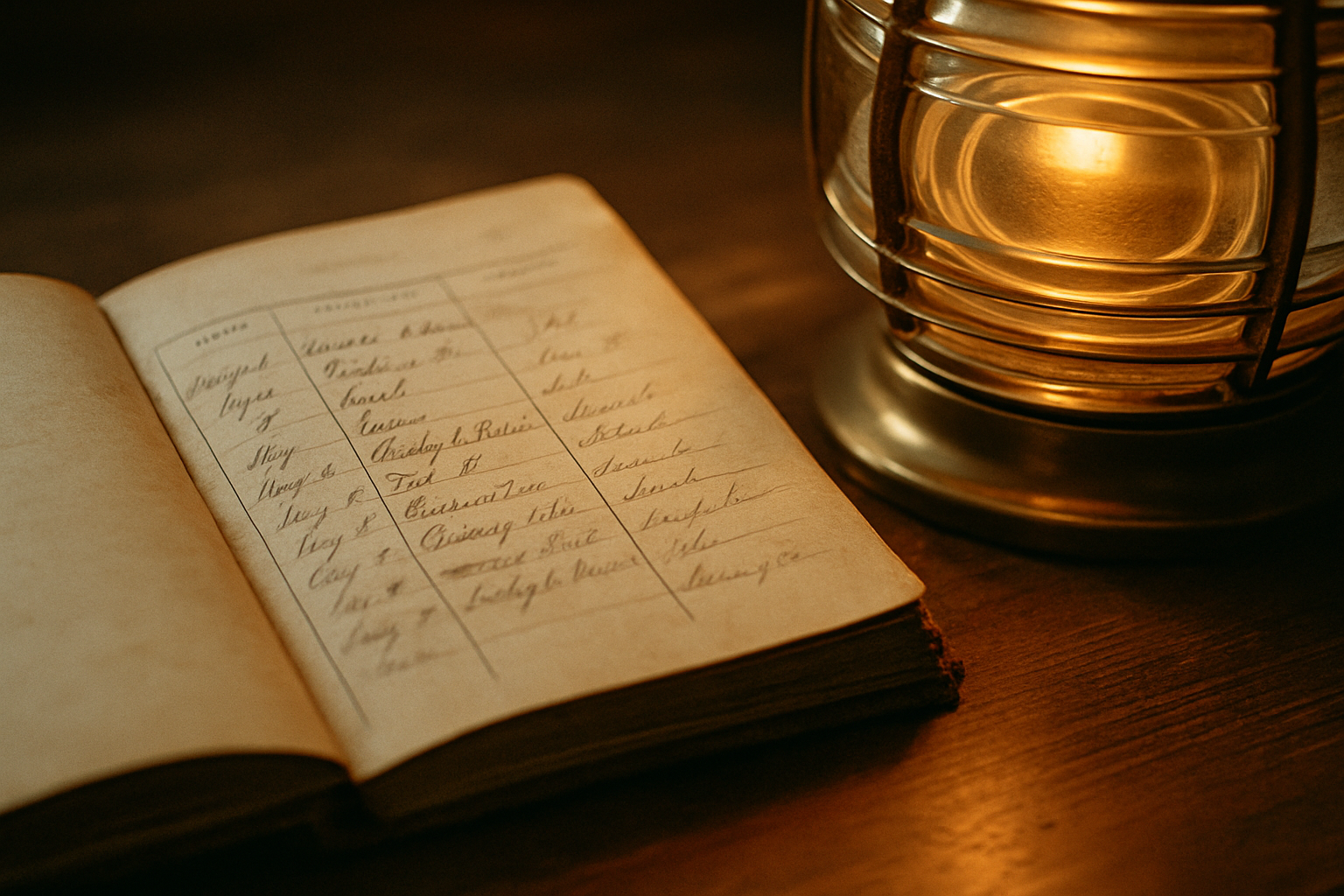
After the winter transfer of 1912, Marrin kept a nightly weather ledger and maintained signal timing through two seasons of heavy fog, leaving one of the clearest station records on the coast.
“When the bell could not carry through the wind, I watched the sea itself for warning.”
Setting detail: Lantern gallery above a granite headland, 1912–1914, with fog-signal log entries every two hours.
Profile
Fielding documented passing steamers with careful margin sketches, noting horn cadence, tide height, and winter light visibility from the lower channel.
“A clear note at dawn was often worth more than a full noon sky.”
Setting detail: Timber watch room facing the shoals, 1898 register, hand-marked tide board.
Profile
Nylen’s correspondence describes supply delays and lamp maintenance routines, offering rare insight into domestic work woven into station duty.
“The flame asked for patience first, strength second.”
Setting detail: Brick service kitchen beside the tower stair, spring repair season, 1921.
Profile
Serving rotating assignments, Ives kept concise transfer notes that map changing duties between towers and reveal practical cooperation among nearby lights.
“Every handover began with the weather and ended with the wick.”
Setting detail: Iron balcony and signal shed, late-autumn relay route, 1907.